
Trading up for BNG planning: What is the unit value of the habitat you’re creating?
12 Jun 2024 | 7 min read


Where is the best place to start when you’re creating plans to achieve the 10% biodiversity net gain (BNG) mandate for new development projects?
You must apply the “like-for-like or better” principle as successful compensation for the biodiversity your development will affect, and BNG should be at least ecologically equivalent in type and condition to any habitats lost. Any loss should therefore be replaced with the same habitat type or one of higher ecological value. For example, that could mean replacing a medium-level grassland with a higher-level grassland or enhancing a species-poor hedgerow.
Regardless, the goal is to achieve the correct number of biodiversity units to deliver 10% BNG or more.
But where do you begin?
Determine project needs and constraints
For your site development, consider these questions:
- How many biodiversity units will your development need to provide?
- How realistic are the proposed habitats you can create on the site?
- What level of condition is the habitat likely to achieve over the agreement period?
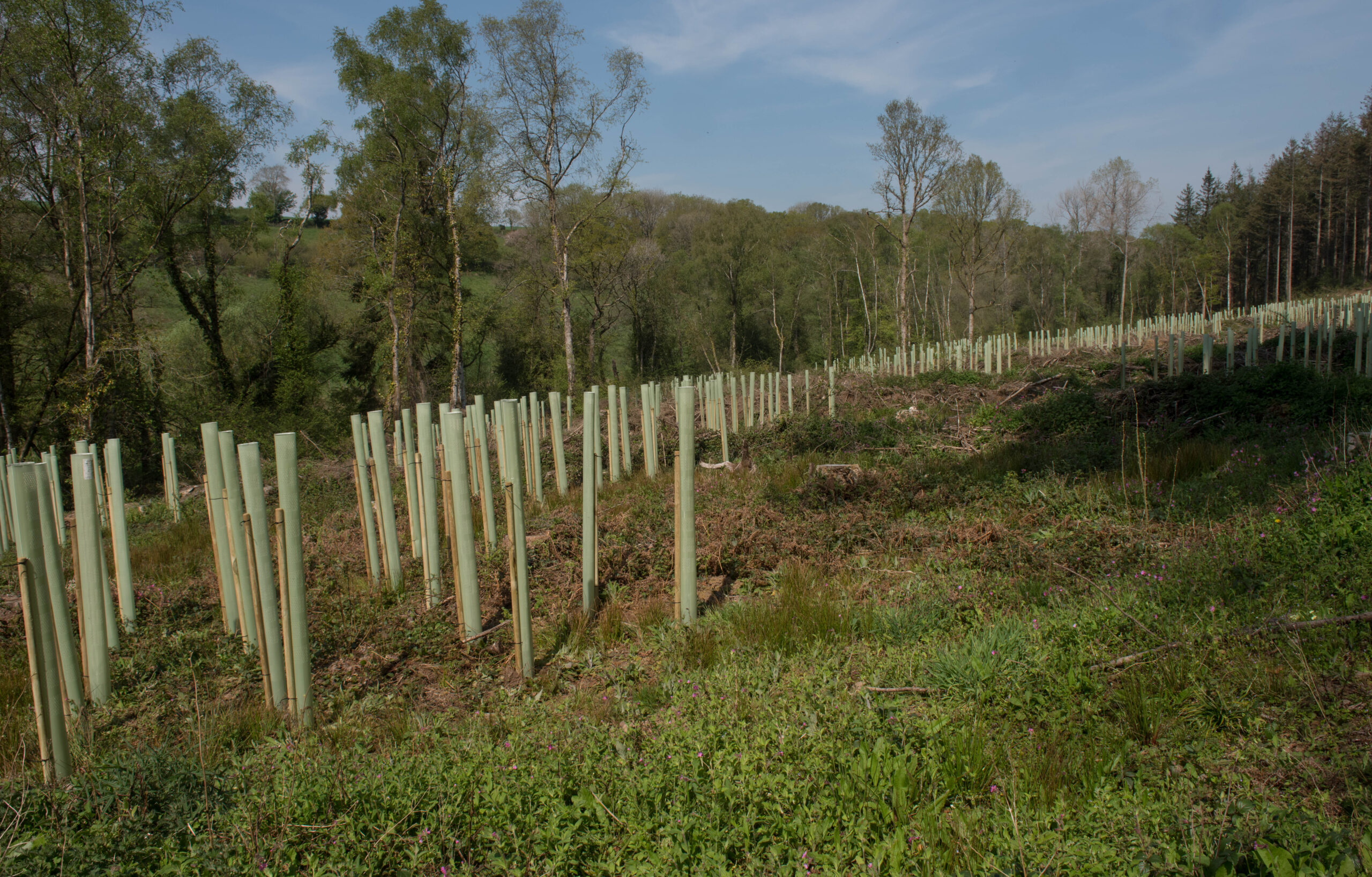
The biodiversity net gain planning preference is for on-site compensation and BNG measures, which means you will retain, enhance, or create habitats on your site. In most situations, you should target only relatively simple, low-maintenance habitats within the development site. This will ensure that you’re able to deliver and properly manage the proposed habitats to achieve the intended biodiversity value in the long term.
Ideally, aim for several simple and robust habitat types because they’re relatively easy to create and maintain in the long term and deliver strong biodiversity value with relatively low maintenance requirements. Which habitat type or types you choose will depend on the soil, drainage, and aspect of the site. An ecologist can advise you as you plan this.
The Defra Statutory Biodiversity Metric will evaluate and score attributes of your proposed habitat, including:
- Distinctiveness: Ranks the habitat’s value to wildlife, from low and medium to high and very high.
- Strategic significance: Determines the significance of the habitat to its local surroundings. This will be based on the Local Nature Recovery Strategy (LNRS), if one has been published.
- Difficulty of creation or enhancement: Rates effectiveness of techniques you use to create or enhance habitats.
- Offsite habitat proposals: Considers spatial risk—the distance the off-site habitat is located from the impact site.
- Time to target condition: Looks at temporal risk, or average time lag between the start of habitat creation or enhancement works and the targeted outcome.
Weigh approaches to trading up
Trading up to comply with BNG means taking the type of habitat you have and enhancing it to improve its biodiversity value. As you select the habitat you will trade up to, to achieve BNG, recognize the scoring factors listed above, but also consider discount rates the Statutory Biodiversity Metric applies to habitat choices.
For example, while lowland meadow is the most species-rich and highly distinctive habitat listed in the table below, it’s also difficult—and thus less likely—to achieve. So, the Statutory Biodiversity Metric tool activates a large discount on this option. With the discount applied, the meadow does not deliver much more value than modified grassland—which is the easiest habitat to create.
Trading up from croplands
View the table below to consider some examples of on-site habitat creation opportunities for 1 hectare of cropland. It provides both realistic options and those that are harder to achieve when enhancing cropland, which has low biodiversity value, to realize a higher-biodiversity value.
Once a crop has been removed, you can reseed the site using a standard seed mix of grass and wildflowers with little (low) difficulty to create modified grassland with a low distinctiveness value. This modified grassland can realistically achieve a moderate condition in 4 years and deliver 3.47 biodiversity units.
In contrast, a lowland meadow with high distinctiveness would take 10 years with a high degree of difficulty to achieve a moderate condition and deliver 3.7 biodiversity units.
Another example is to create other neutral grassland, with a medium distinctiveness score, a low standard of difficulty, and the expectation of 5 years to achieve a moderate condition. This would deliver 6.69 biodiversity units.
A further option may be to create a traditional orchard. This would deliver 5.88 biodiversity units, with a low difficulty standard, and it would require 20 years to reach a moderate condition.
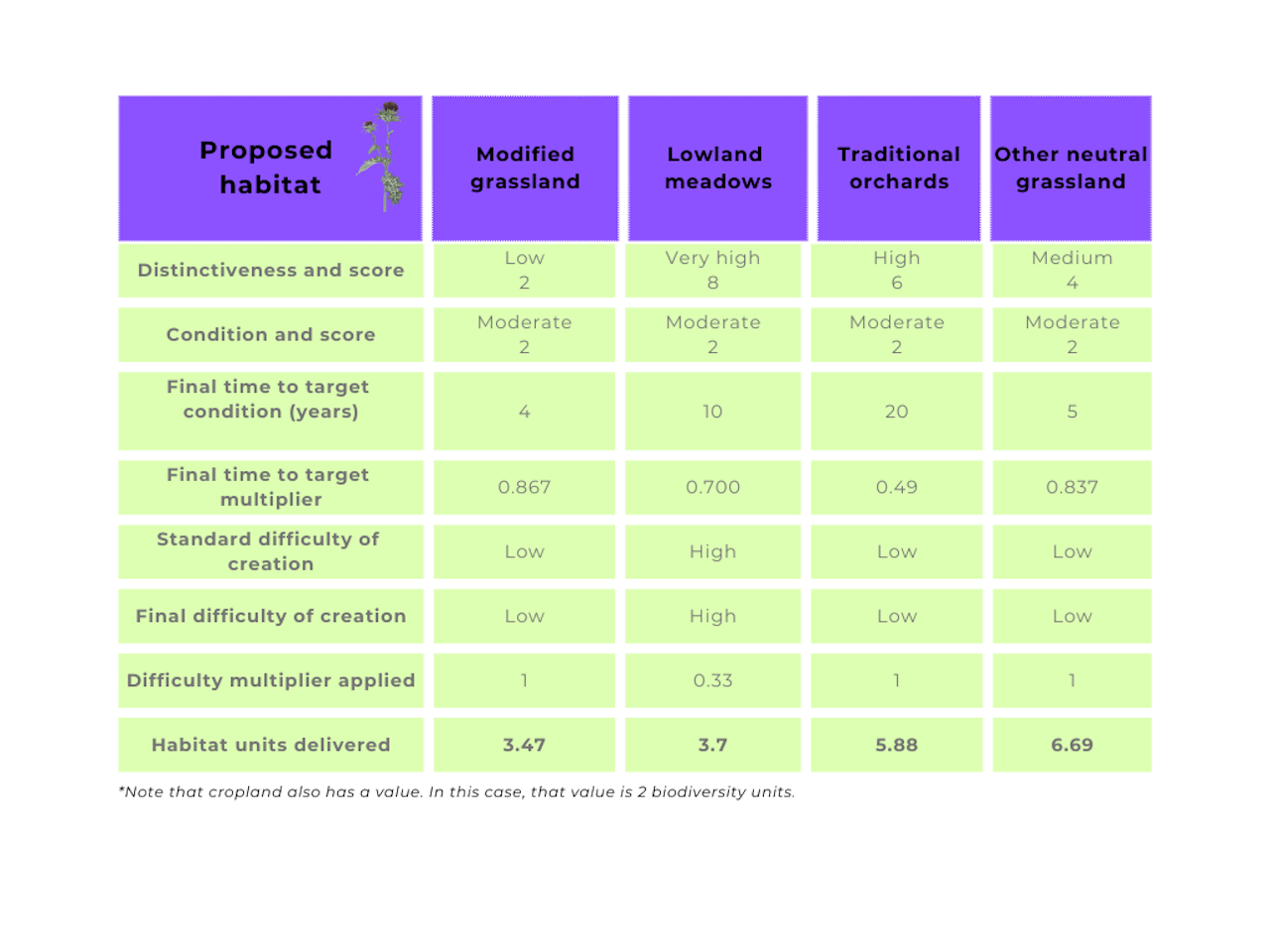
Therefore, in our sample case of trading up from cropland, for ease and number of units earned, grassland may be your best choice.
Caveats: The discounts are also dependent on the conditions you’ve applied––that is, whether you’re aiming for poor, moderate, or good conditions. In addition, be cautious about the “spatial” discount, which is not explicit in the tool. The spatial discount increases (decreasing biodiversity value) when you choose offsite credits: The farther from your building site you locate offsite habitats to create your BNG credits, the higher the spatial discount.
Your best practice
From the Statutory Biodiversity Metric tool’s calculations, you can see what is involved in trading up to a specific habitat. While this is what the tool recommends, an ecologist or other competent professional can help you look at other factors that influence what is likely to be successful, such as your site’s aspect, soil, and drainage.
Be sure you select the approach that best fits with the timing and difficulty you’re willing to undergo to trade up and produce 10% BNG results.
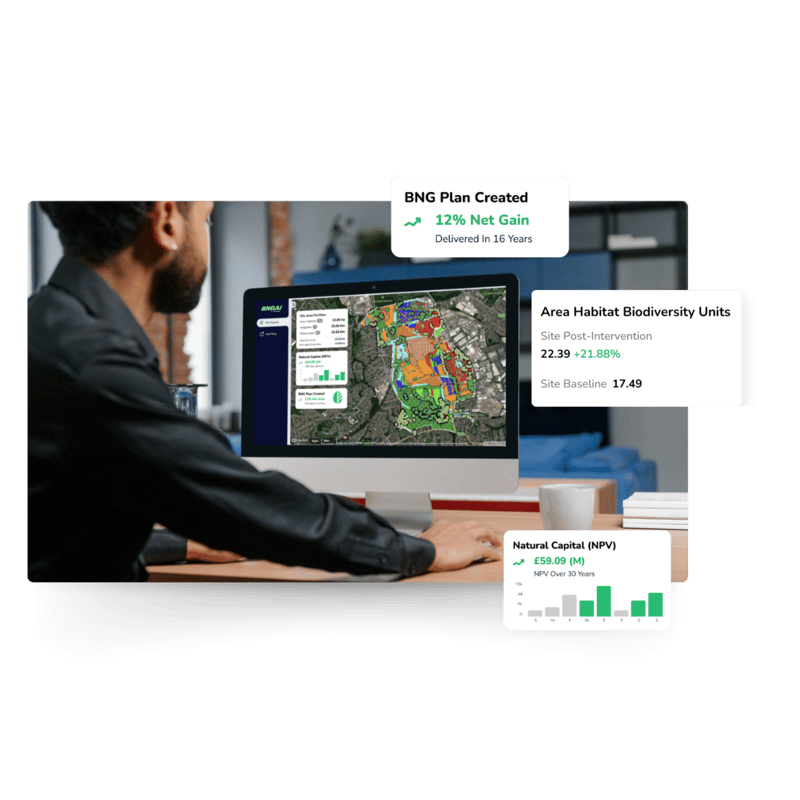
Learn how AiDash BNGAI™ can guide you through your “trading up” strategy for your BNG planning applications.

Chris Talbot, Senior Ecologist
BNGAI™ –– Biodiversity Net Gain Management System, EMEA
Before joining AiDash, Chris was the Biodiversity Manager for the Warwickshire, Coventry and Solihull Habitat Biodiversity Audit Partnership, overseeing the Phase 1 habitat survey and Local Wildlife Sites surveys for the Warwickshire sub-region. Among the projects he was involved in was the Warwickshire BNG Pilot Study 2012 – 2014 –– 1 of the 6 national pilot areas to trial biodiversity offsetting, working closely with Warwickshire County Council.
You May Like