With the staggering variety of species, genetic differences within species, and the multitude of ecosystems they inhabit, it’s no wonder measuring biodiversity can be difficult. It’s challenging to find ways to measure biodiversity accurately. Issues range from academic intricacies to practical difficulties encountered by field ecologists and organizations.
Complexities begin with the selection of which species to monitor and where to monitor them. The scale of observation varies widely, from scrutinizing single-celled organisms in soil samples to counting mature tree species in a vast expanse of forest. The choice of method hinges on the academic scientific queries or real-world issues driving the study.
Species challenges
Biodiversity measurement methods vary hugely between different target species. Qualities of species, notably their size, mobility, rarity, and conspicuousness all impact the measurement approach. Generally, it’s easier to spot a large, common, still and colorful organism than a small, rare, mobile, and camouflaged one.
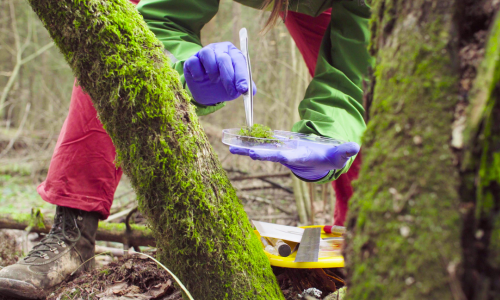
Different methods must be employed for different habitats: Species living below ground must be unearthed, flying species must be captured or spotted while on the wing, and species in rivers must be collected from the water or riverbed. Yet an ecosystem may consist of multiple habitats that need sampling.
In urban neighborhoods, biodiversity assessment typically revolves around parks and green spaces, focusing on plants, birds, amphibians, and insects. But these organisms respond uniquely to their environment. Plants, rooted to the ground, mirror local conditions in their distribution, so areas with different conditions must be sampled to capture all plant biodiversity.
In the same area, mobile birds swiftly relocate when faced with environmental stress or to seek out food or company. Measuring these birds may seem as straightforward as noting down each species encountered, regardless of the number of individuals. However, the practical task of inventorying a large site like Mount Auburn Cemetery in Cambridge, Massachusetts, which hosts over 200 bird species — each with hundreds or thousands of individuals — is substantial.
Amphibians, like newts and toads, rely on the delicate balance between wet spaces and green spaces; any disruption could lead to population decline. Insects, highly sensitive to environmental changes, act as indicators of ecosystem health. Much care must be taken to monitoring the important compartments of each ecosystem to ensure that they are healthy enough to support a diversity of life.
Resource constraints
Despite the earnest desire to capture the best quality data possible, field ecologists face practical hurdles in conducting comprehensive assessments. Resource constraints, including funding, technology, and expertise, commonly hinder biodiversity studies.
However, the dominant limiting factor is time: the time the experts have to conduct work, the time before the seasons change and the sampling window closes, and the time an endangered species has before conservation intervention will be too late to save it. In a world grappling with climate change, the urgency to measure biodiversity’s resilience against these changes amplifies the pressure.
One exciting avenue for gathering more data more quickly is expanding the accessibility of data collection to volunteers and members of the public — reducing the dependence on experts for data collection.
Citizen science and unstructured data analysis
Citizen science, a burgeoning field tapping into public participation, offers vast data resources. Huge initiatives such as the RSPB’s Big Garden Birdwatch harness the enthusiasm of thousands of families to collect huge amounts of data on the UK’s bird species and their locations. The Woodland Trust’s initiative Nature’s Calendar collects data on phenology — the timings of seasons and species activity — to monitor how climate change is affecting when trees drop leaves, create new buds, and flower. Smaller initiatives, such as encouraging visitors to a fire-ravaged site to upload pictures of their visit, can give researchers access to a huge amount of data about the recovery of the site over months and years.
Data interpretation
However, challenges persist in analyzing this unstructured data effectively. Issues stemming from observer behavior, data structures, statistical models, and communication pose hurdles that demand innovative solutions.
These difficulties trickle into real-world applications. For instance, inconsistencies in data collection methodologies or divergent results between different assessment approaches could hinder informed decision-making. Researchers and analysts work very hard to draw unambiguous conclusions from these kinds of studies. Land use regulations and policy formulations, essential for conservation efforts, rely heavily on accurate biodiversity assessments. As such, citizen science approaches normally work in tandem with other species monitoring approaches to provide a more holistic approach to biodiversity monitoring.
Navigating these complexities demands a concerted effort. Investment in education and training for ecologists, increased funding for comprehensive assessments, and innovative analytical approaches to integrate disparate data streams are imperative steps forward.
Distributed ownership of nature and nature monitoring
Whatever might be said about the quality of citizen science data, it achieves several things that traditional monitoring approaches cannot. It empowers citizens, it makes nature accessible, and it fosters a love of local nature in participants.
Biodiversity has long been the domain of an educated or affluent few. Citizen science encourages the restoration of ownership of conservation work and nature to local, indigenous, or disenfranchised communities. Educating the public about how data is collected and giving them permission to go out into nature to collect it increases the utilization of natural spaces by a community. With luck, these feelings of ownership and understanding of nature will encourage communities to conserve what they have at home and outside of their neighborhood.
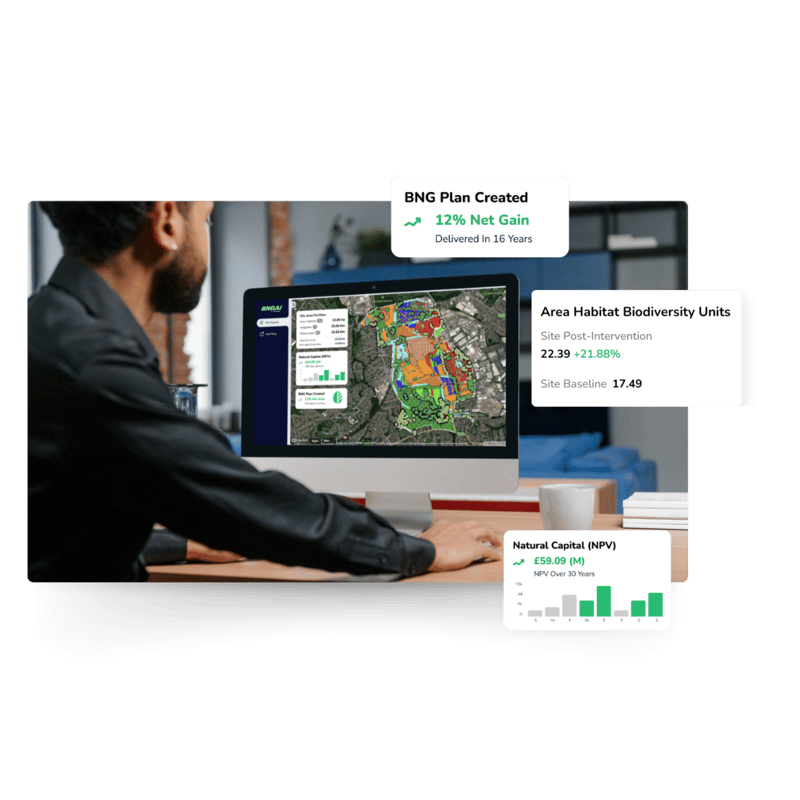
Continue your deep dive into biodiversity measurement here, or learn how AiDash makes it easy to measure biodiversity for BNG planning on BNGAI™.
Reference:
- LMU Urban Ecology Lab: Measuring Biodiversity
https://academics.lmu.edu/media/lmuacademics/cures/urbanecolab/module06/M6_L2_Reading-MeasuringBiodiveristy.pdf - Johnston, A., Matechou, E., and Dennis, E. B. “Methods in Ecology and Evolution: Outstanding challenges and future directions for biodiversity monitoring using citizen science data.” February 20, 2022. British Ecological Society. https://besjournals.onlinelibrary.wiley.com/doi/full/10.1111/2041-210X.13834
- Asher, C. “UCL About: The Challenge of Monitoring Biodiversity.” August 4, 2015. GEE Research, UCL. https://blogs.ucl.ac.uk/gee-research/2015/08/04/challenge-monitoring-biodiversity/#:~:text=In%20order%20to%20assess%20whether,course%20this%20is%20not%20possible.
- Tang, C. “Citizen scientists get snappy to monitor bushfire-ravaged environment.” Jan 30, 2020. Newsroom, UNSW Sydney. https://newsroom.unsw.edu.au/news/science-tech/citizen-scientists-get-snappy-monitor-bushfire-ravaged-environment